AI-Powered Viral Mapping: A New Frontier in Global Pandemic Preparedness

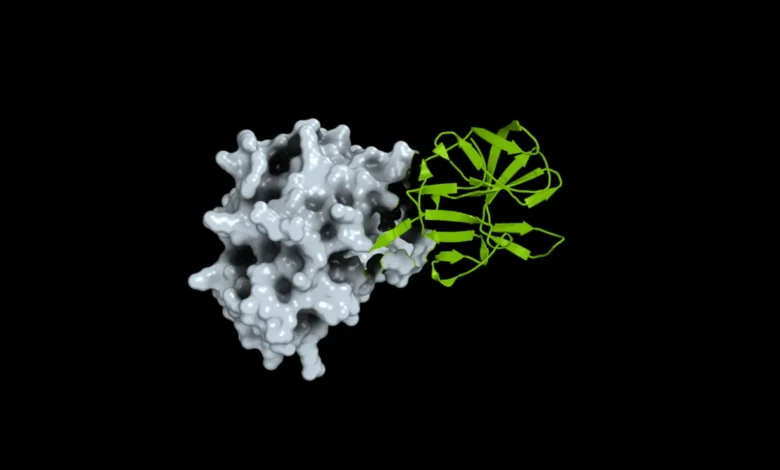
When the COVID-19 pandemic paralyzed the global landscape in early 2020, the scientific community faced an immediate, existential race against time. Researchers were fortunate that decades of prior study into coronaviruses had already provided a baseline understanding of the spike protein’s structure, which proved instrumental in the rapid development of mRNA vaccines. However, virologists and public health experts have long cautioned that the next "Disease X"—an unknown, potentially highly pathogenic agent—may not provide the same luxury of prior knowledge. In a significant shift toward proactive defense, a global coalition led by NVIDIA, Google DeepMind, and the European Molecular Biology Laboratory’s European Bioinformatics Institute (EMBL-EBI) has unveiled a massive dataset containing predicted 3D structures for the protein complexes of over 2,800 viruses.
This milestone, which democratizes access to complex biological data, is designed to transform how the world prepares for future outbreaks. By leveraging the computational power of artificial intelligence, researchers are effectively "stockpiling" knowledge about viral architectures that were previously hidden from human observation.
The Technological Leap: From Years to Minutes
For decades, the standard for determining the 3D structure of a protein was a laborious, expensive process known as X-ray crystallography or cryo-electron microscopy. This process often required years of intense laboratory work and significant financial investment to solve the structure of a single protein. The advent of AlphaFold2, an AI model developed by Google DeepMind, revolutionized this paradigm by predicting the shapes of proteins based on their amino acid sequences with remarkable accuracy.
The current collaboration takes this capability a step further. By integrating the NVIDIA BioNeMo Inference Runtime, the team was able to scale the predictive power of AlphaFold2 to analyze entire viral proteomes. This optimization allows the model to process thousands of viral complexes—groups of proteins that work together to perform the sophisticated functions that allow viruses to infect, replicate, and evade immune responses—in a matter of minutes.
The release of this data via the AlphaFold Database marks a departure from traditional, siloed research models. It provides a foundational toolkit for scientists globally, including those in low-resource settings, to investigate viral mechanisms without the prohibitive costs of early-stage structural biology.
Chronology of a Data-Driven Defense
The initiative represents the culmination of a multi-year effort to map the biological "dark matter" of viruses.
- 2020–2021: The immediate global response to COVID-19 highlighted the critical need for structural data in vaccine design.
- 2022: The expansion of the AlphaFold Database began, incorporating millions of protein structures and moving beyond single proteins to complex, multi-protein interactions.
- 2023: NVIDIA and its partners began scaling the BioNeMo framework to target specific viral families known to pose high risks to human health.
- 2024: The current release of over 2,800 viral complexes coincides with high-level United Nations General Assembly discussions on pandemic preparedness, signaling a shift toward integrating digital biology into global health policy.
Data-Driven Insights and the 50% Challenge
The urgency of this project is underscored by sobering statistical analysis. Experts at the Center for Global Development have estimated that there is a roughly 50% probability of the world facing a pandemic of similar severity to COVID-19 by the year 2050. This estimate accounts for increasing urbanization, climate-driven migration, and the encroachment of humans into previously isolated wildlife habitats, all of which increase the frequency of zoonotic spillovers.
Approximately 30% of the protein interactions featured in the new dataset are entirely novel to science. These structures have never been documented in the Protein Data Bank, the long-standing, globally recognized repository for experimentally determined structures. By uncovering these previously invisible interactions, the research coalition is providing a "hypothesis engine" that allows scientists to understand not just what a virus is, but how it behaves within a host.
Perspectives from the Scientific Frontline
The project has garnered significant support from the international research community. Joe Grove, a professor of molecular virology at the Medical Research Council-University of Glasgow Centre for Virus Research, emphasizes the shift in perspective this database affords. "When the next pandemic happens, there may be something that comes out of the blue, and we’ll be lacking the knowledge we had for COVID," Grove stated. "What we’re trying to do is stockpile some of that knowledge ahead of time."
From the perspective of computational biology, the impact is equally profound. Chris Dallago, an applied research science team lead in digital biology at NVIDIA, notes that the ability to visualize protein complexes rather than isolated molecules allows for a holistic understanding of viral function. "We’re enabling biologists and the AI community to investigate protein interactions, not just as single molecules but as complexes, so the whole field can move forward," he said.
Jo McEntyre of EMBL-EBI highlighted the social justice aspect of the initiative: "Making this data open is critical for understanding viral diagnostics and developing treatments and vaccines. The dataset also covers lesser-studied viruses and lowers the barriers for scientists in low-resource settings who are confronting outbreaks firsthand."
The BioNeMo Pipeline: Enabling Independent Discovery
Beyond the static database, NVIDIA has taken the step of releasing the BioNeMo Structure Prediction Pipeline. This open-source, GPU-accelerated workflow allows individual research laboratories to conduct their own structure predictions on proprietary or newly discovered targets. By providing the tools used to build the database, NVIDIA is ensuring that the scientific community is not merely a passive consumer of the data, but an active participant in expanding the map of viral biology.
This pipeline effectively democratizes high-performance computing in biology. Where once only institutions with access to massive supercomputing clusters could perform these types of predictions, the current integration of NVIDIA’s software stack with standard GPU infrastructure makes this level of analysis accessible to a wider array of academic and clinical researchers.
Broader Implications: Redefining Public Health Strategy
The release of these structural predictions carries significant implications for future drug discovery. Most antiviral drugs function by binding to a specific site on a viral protein to block its function. Knowing the 3D shape of these proteins—and how they interact with one another—is the prerequisite for designing "lock and key" therapies.
Furthermore, this data serves as a roadmap for diagnostics. By identifying the unique structural signatures of various viral families, researchers can develop more accurate and faster testing platforms. The inclusion of Mpox and other emerging threats in the dataset demonstrates that this tool is not intended only for historical analysis, but as a live, evolving defense mechanism.
As the world continues to grapple with the long-term impacts of the COVID-19 pandemic, the shift toward "anticipatory science" represents a fundamental change in the public health landscape. Instead of waiting for a pathogen to emerge and then initiating a years-long research process, the global scientific community is now armed with a massive, AI-generated library of structural data.
While no database can fully predict the complexity of biological evolution, the work conducted by this coalition provides a significant head start. By mapping the molecular architecture of the viral world, scientists are ensuring that when the next threat appears, the world will have the tools to respond with the speed and precision that was once thought to be impossible. This project stands as a testament to the intersection of high-performance computing, artificial intelligence, and international cooperation, providing a vital layer of security in an increasingly unpredictable world.
Related posts: